CONTENDER A · AUDIOBOOK
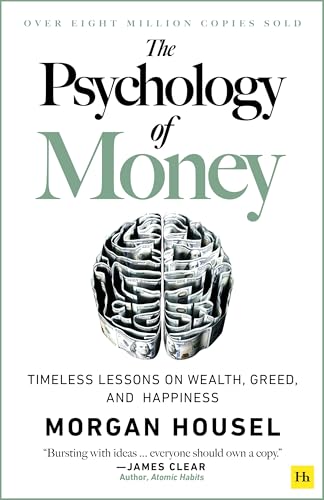
The Psychology of Money
Timeless Lessons on Wealth, Greed, and Happiness
Listen on Audible →
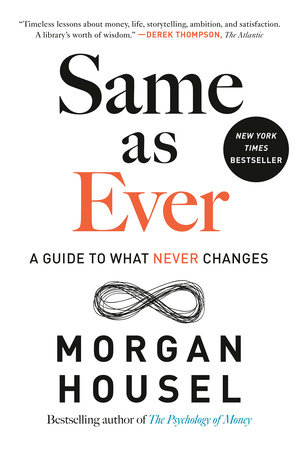
Morgan Housel wrote The Psychology of Money in 2020 and Same as Ever in 2023. Both became instant bestsellers. Both are narrated by Chris Hill. Both run under six hours. Both make the same basic argument in slightly different registers: that human behavior — not intelligence, not information, not strategy — is the primary driver of outcomes in finance and in life.
If you only have time for one, which do you choose?
The Psychology of Money is Housel's first book, and it shows in the best possible way — it has the energy of someone saying things they have been waiting years to say. The nineteen chapters each cover a single idea about the relationship between humans and money: how luck and risk are more influential than skill, why saving matters more than income, what "enough" actually means, and why financial decisions are driven by emotions that look irrational from the outside but make complete sense from the inside.
The audiobook format is particularly effective here because Housel's prose is conversational by design — it sounds like someone explaining ideas across a table, not delivering a lecture. Chris Hill's narration amplifies this quality. He is warm, unhurried, and precise without being stiff.
The book's lasting effect is to change how you observe financial behavior — in yourself and in others. After listening, you start noticing when your own decisions are driven by fear, status, or story rather than logic. That is not a small thing.
Same as Ever takes Housel's core insight — that human nature is more predictable than the future — and applies it far beyond finance. The twenty-three chapters cover things like why people consistently underestimate risk, how storytelling shapes decisions more than data, why optimism and pessimism coexist permanently, and what genuinely never changes about human behavior regardless of technology or circumstance.
The scope is wider, the examples more varied, and the argument more philosophical. Where Psychology of Money asks "how do humans behave with money?", Same as Ever asks "how do humans behave, period?"
This breadth is both the book's strength and its limitation. Listeners who come to it expecting actionable financial advice will find it more abstract than Psychology of Money. Listeners who come to it wanting a framework for thinking about the world will find it more useful.
Start with The Psychology of Money. It is more focused, more immediately applicable, and establishes the intellectual foundation that makes Same as Ever land harder. Read Same as Ever second, when you already share Housel's framework and are ready to see it applied more broadly.
If you have already read Psychology of Money and want more — Same as Ever is exactly that.
Both are available on Audible and qualify for the 30-day free trial.